

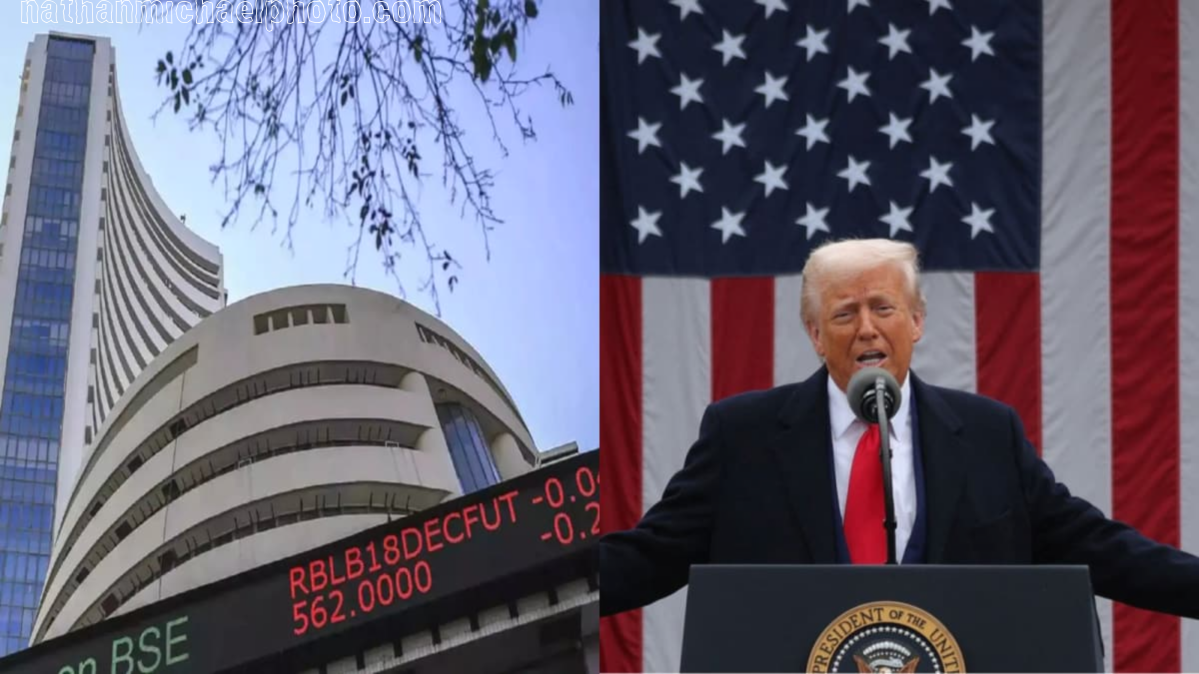
After three consecutive sessions of decline, the Indian stock market staged a confident rebound on Thursday, buoyed by encouraging global signals and renewed optimism surrounding the India–US trade deal. Despite sharp intraday swings, benchmark indices ended firmly higher, restoring investor confidence.
In a volatile monthly expiry session, the BSE Sensex surged 397.74 points to close at 82,307.37, while the NSE Nifty added 132.40 points to finish at 25,289.90, comfortably above the key 25,250 mark. Early momentum was even stronger, though profit-taking trimmed gains as the day progressed.
India–US Trade Deal Optimism Lifts Market Sentiment
Notably, investor mood improved after upbeat remarks from US President Donald Trump on the future of India–US trade relations. Speaking on the sidelines of the World Economic Forum Annual Meeting, Trump expressed confidence in reaching a favorable bilateral trade agreement and praised Prime Minister Narendra Modi’s leadership.
This optimism has tangible implications for equity markets in India, particularly for export-oriented sectors such as information technology, manufacturing, and pharmaceuticals. Analysts point out that a clearer trade framework between the two economies could reduce policy uncertainty and support long-term foreign institutional investment inflows.
Meanwhile, easing geopolitical rhetoric from Washington helped calm global markets. Trump ruled out the use of force in Greenland-related discussions and signaled restraint on imposing fresh tariffs on European allies, reducing fears of a broader trade conflict.
Strong Global Cues and Sectoral Performance
Asian markets largely mirrored the positive tone. Japan’s Nikkei 225 jumped nearly 2%, Taiwan’s benchmark rose around 2%, and South Korea’s KOSPI gained over 1.6%. Hong Kong’s Hang Seng edged slightly lower, but the broader regional trend remained supportive.
Back home, most sectoral indices ended in the green, with gains led by banking, capital goods, and FMCG stocks. Real estate and consumer durables were the only notable laggards. Broader markets outperformed, as both mid-cap and small-cap indices advanced close to 1% each.
Volatility also cooled meaningfully. The India VIX slipped more than 4% to 13.22, indicating reduced near-term fear among traders. Market participants attributed part of the rally to short covering, given the large number of outstanding bearish positions.
Technical Levels and What Investors Should Watch Next
That said, analysts caution against complacency. Technical indicators suggest a level-based trading strategy remains prudent. Key support for the Nifty is seen near 25,000, while resistance lies around 25,300–25,350. A decisive move above this zone could open the door to further upside.
Looking ahead, investors will closely track corporate earnings, global macro signals, and policy updates. Official updates from the NSE, BSE, and international forums such as the World Economic Forum will remain central to near-term market direction.