
Step off a long-haul flight and your shoes suddenly feel tighter than they did at takeoff. That heavy, uncomfortable sensation in your legs is more than an annoyance—it’s a common travel issue that tends to worsen during winter journeys.
According to Dr. Sanjay Sharma, podiatric surgeon and co-founder of FootSecure, extended periods of sitting slow blood circulation in the lower limbs, allowing fluid to collect around the ankles and calves. Meanwhile, cold cabin temperatures can constrict blood vessels, compounding the problem. Notably, people who are pregnant or experiencing hormonal changes may be even more prone to travel-related leg swelling.
Why Long Flights Cause Leg and Ankle Swelling
During prolonged air travel, limited leg movement reduces the natural pumping action of the calf muscles. As a result, blood and lymphatic fluid move more slowly back toward the heart. Meanwhile, low cabin humidity can lead to dehydration, which thickens the blood and further impairs circulation.
That said, winter travel introduces another variable. Cold temperatures narrow blood vessels, making it harder for fluid to circulate efficiently. Over time, this combination explains why swollen feet after flying, ankle edema during air travel, and stiff legs after long flights are such common complaints.
Four Expert-Recommended Ways to Reduce Post-Flight Swelling
Start with compression support. Before boarding, wear graduated compression stockings rated at 15–20 mmHg or higher. These medically designed garments gently encourage blood flow upward, helping prevent fluid from pooling in the lower legs. Health organizations such as the NHS routinely recommend them for long-distance travelers.
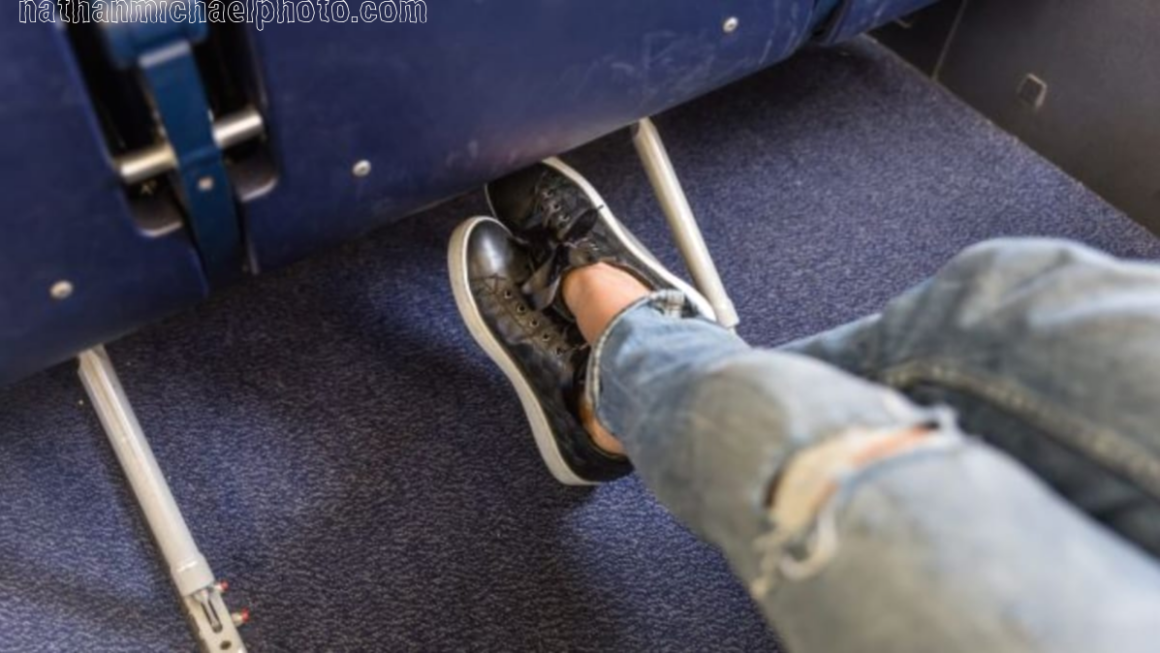
Keep your legs moving in the air. Prolonged sitting is the main contributor to swelling after flying. Aim to stand or walk the aisle every one to two hours. If seatbelt signs prevent this, ankle circles, foot flexes, and gentle knee lifts can still activate circulation. Avoid crossing your legs, as it restricts blood flow.
Be mindful of what you drink and eat. Hydration plays a major role in preventing leg swelling during flights. Drink water regularly and limit coffee, tea, and alcohol, which may contribute to dehydration. Meanwhile, salty snacks encourage water retention, often settling in the lower extremities.
Elevate your legs after landing. Once you arrive, lie down and raise your feet above heart level for 15–30 minutes. This simple step uses gravity to help drain excess fluid and speeds recovery after long-haul flights.
When Swelling Could Signal a More Serious Issue
Mild swelling typically subsides with movement and rest. However, swelling in only one leg—especially when paired with warmth, redness, or sharp discomfort—should be evaluated promptly. These symptoms may indicate Deep Vein Thrombosis, a condition outlined by the Centers for Disease Control and Prevention as a rare but serious risk associated with extended travel.
Meanwhile, for most travelers, simple preventive habits make a meaningful difference. With the right preparation, you can land feeling lighter on your feet—no matter how long the journey or how cold the season.